You’re headed to the farmer’s market, need some cash to pay the babysitter, or want to quickly deposit a paycheck. Like you’ve done hundreds of times before, you simply swing by the nearest ATM to withdraw cash or make a deposit. We’re so used to performing banking transactions like this that we rarely pause to think about life before automated teller machines were widely available in our cities and towns. How did banking become a 24-hour business with access points spread across the globe? Read on as the experts at Hyosung America discuss the history of the ATM, from the original cash dispensers to the multi-function machine of today.
The First Cash Dispensers
It’s not exactly clear where the first cash dispenser machine was put into service. A Barclays bank in Enfield, U.K. claims to be the location of the first cash dispenser, but it seems throughout the late 1960s, similar machines were sprouting up all over Europe and Japan, with rollouts in the U.S. soon to follow. All over the world, banks operated during hours when most people were at work. The lack of after-hours banking options was truly a global problem.
The first cash dispensers did just one thing, and one thing only: dispense cash. Though cash withdrawals remain the most common transactions at today’s machines, we expect modern ATMs to be capable of much more.
What Makes an ATM an ATM?
Soon, these simple machines began to offer additional transactions, and thus the automated teller machine was born. With features like accepting deposits, cashing checks, checking the balances of multiple accounts, and making transfers between accounts, a new generation of ATM cash dispensers appeared in the 1970s across the entire globe.
These new transactions were made possible by technical breakthroughs that allowed the accurate counting of deposited cash, communication between different machines over a dial-up network, and magnetic stripe technology and pin pads that allowed customers to securely access their accounts.
By the mid-70s, we have much more than after-hours cash dispensaries; we have machines that can do what a human teller does. Though different manufacturers and FIs claim to have introduced the modern ATM, the actual development of today’s machines was really a group effort.
The ATM Continues to Evolve
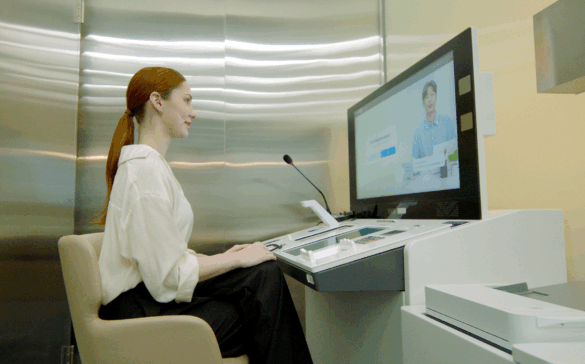
At this point, it might seem like the modern ATM had basically arrived on the scene. However, innovation didn’t stop in the 1970s. Cash dispenser ATM machine technology has continued to improve steadily over the decades. From accessibility upgrades for the hearing impaired to video touch screens that allow for teller-assisted transactions, design improvements that make repairs quick and easy, and cash recycling capabilities that cut down on money handling expenses, ATMs continue to evolve to meet the needs of today’s customers.
If you’re interested in upgrading or expanding your fleet of ATM machines, contact Hyosung America today. We’ve helped FIs and ATM operators deploy thousands of the latest machines all across the continent, and have the experience you need to maximize your business’s potential.